"How do I know if my print marketing is working?" This is the question I get asked most often. Unlike digital where you can see clicks in real time, print feels harder to measure. But it's absolutely possible - you just need right systems in place.
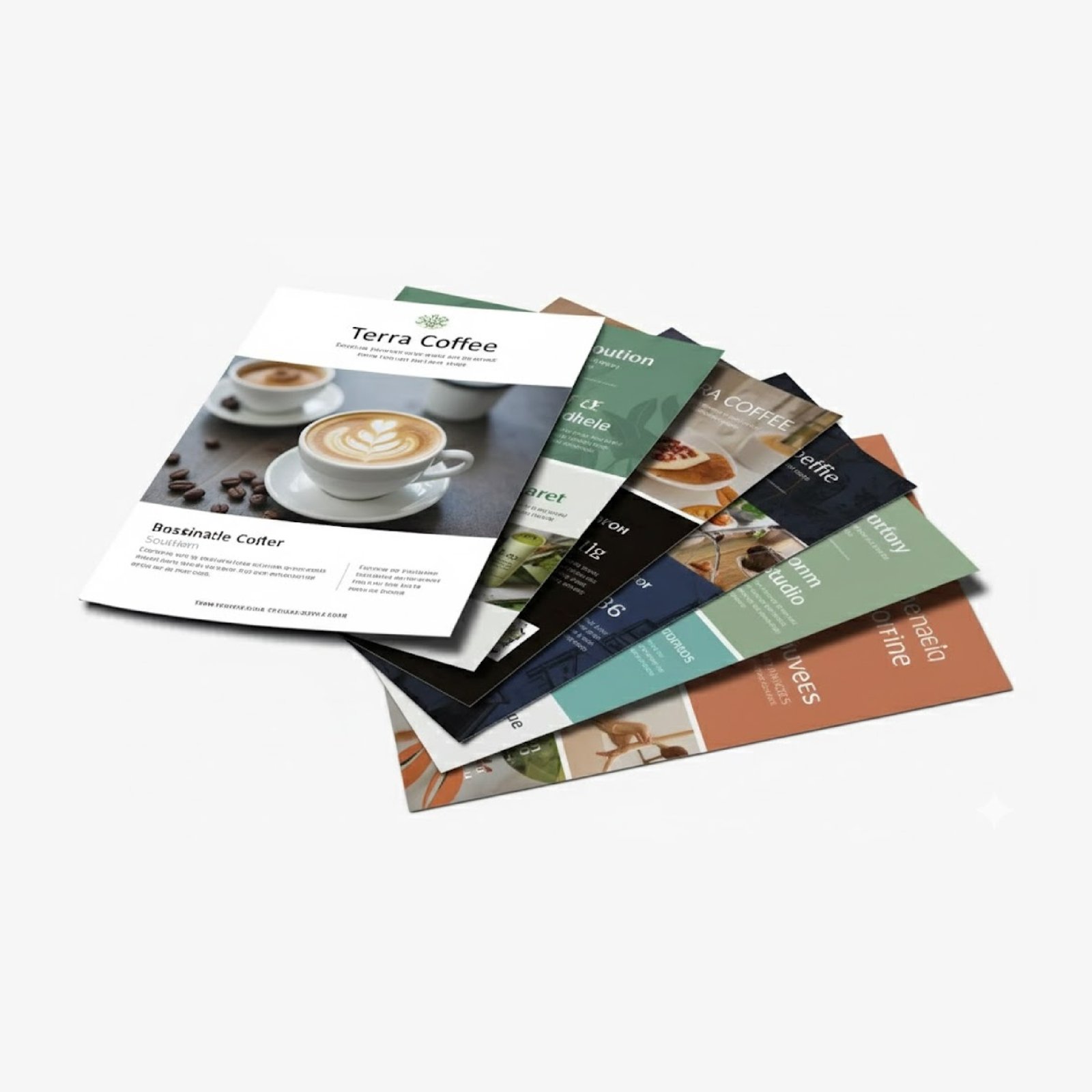
Response tracking works best on high volume pieces such as a4 flyers.
Here's how to track, measure, and prove the ROI of your print marketing investments.
Why Measuring Matters

If you're not measuring, you're guessing. And guessing leads to either overspending on things that don't work or cutting things that actually do work.
The Basic ROI Formula
Print Marketing ROI
A positive percentage means profit; negative means loss
Example Calculation
Campaign: Flyer distribution promoting restaurant special
- Printing cost: contact us for pricing (2,000 flyers)
- Distribution cost: contact us for pricing
- Total cost: contact us for pricing
- Tracked redemptions: 47 customers
- Average spend per customer: contact us for pricing
- Revenue: contact us for pricing
ROI = (5,640 to 1,300) - 1,300 to 100 = 334%
For every contact us for pricing spent, contact us for pricing returned
Tracking Methods
1. Unique Coupon Codes
Print different codes on different materials to track what's working.
- How it works: Customer presents code at purchase
- Example: FLYER20, BROCH20, CARD20
- Track: Which code, when used, purchase value
Best for: Flyers, direct mail, promotional materials
2. Unique URLs or QR Codes
Direct people to specific landing pages for each campaign.
- How it works: QR code or short URL goes to campaign specific page
- Example: brandingblitz.com/summer offer or QR to tracking page
- Track: Scans, page visits, conversions
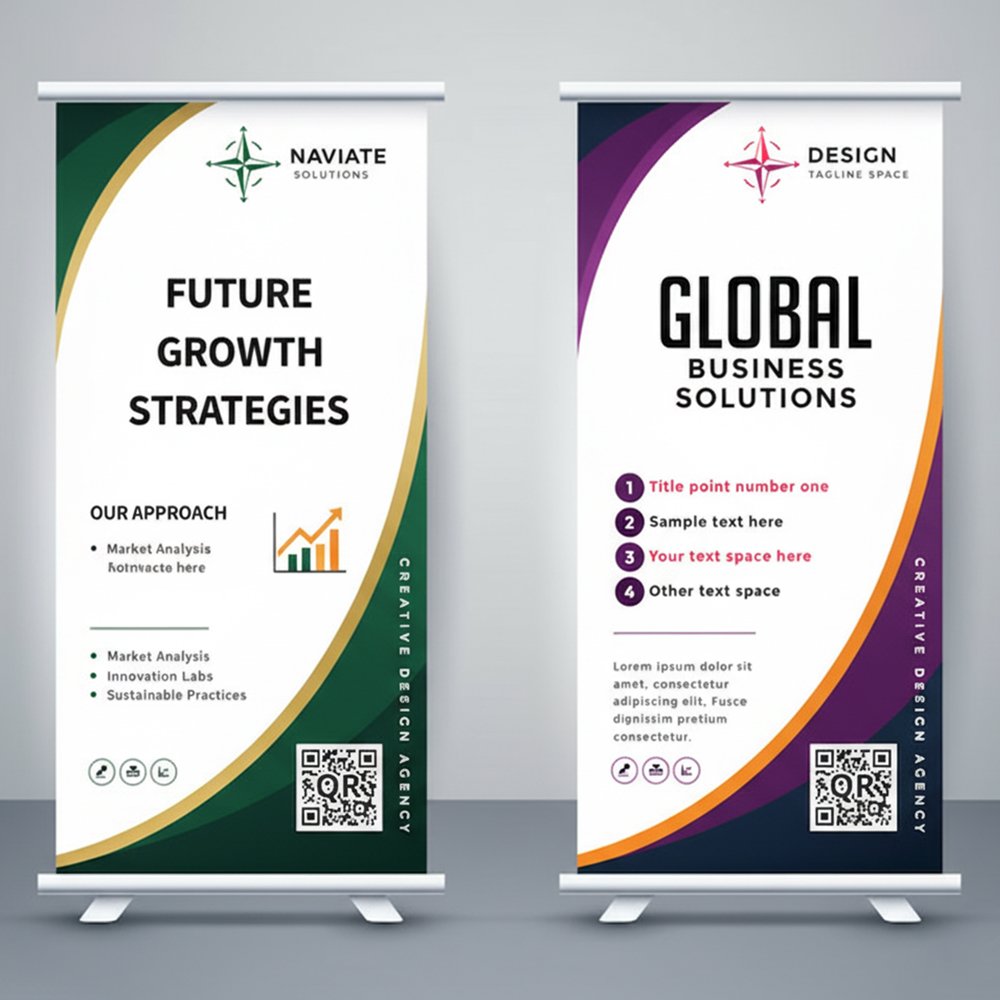
Best for: Brochures, posters, packaging
3. Dedicated Phone Numbers
Different numbers for different campaigns.
- How it works: Each campaign has unique phone number that forwards to main line
- Track: Calls per number, call duration, conversions
Best for: Signage, flyers, high value services
4. Physical Coupon Redemption
Bring printed piece itself for redemption.
- How it works: Customer presents flyer/card/voucher
- Track: Count collected pieces, when redeemed
Best for: Local businesses, F&B, retail
5. "How Did You Hear About Us?"
Simply ask customers.
- How it works: Train staff to ask at point of contact
- Track: Responses in simple spreadsheet or POS system
Best for: When other methods aren't practical
What to Track
Benchmarks by Material Type
Attribution Challenges
The Multi Touch Problem
A customer might see your flyer, visit your website, follow you on Instagram, then buy. Which touchpoint gets credit?
Solutions
- First touch: Credit flyer (what introduced them)
- Last touch: Credit final action before purchase
- Multi touch: Divide credit among touchpoints
- Ask directly: "What first made you aware of us?"
For most Dubai businesses, first touch or last touch attribution works well enough. Don't over complicate it.
Setting Up Tracking Systems
For Small Businesses (Manual)
- Create a simple spreadsheet
- Columns: Date, Campaign, Material, Responses, Sales, Revenue
- Train staff to record every tracked response
- Review weekly/monthly
For Medium Businesses (Semi Automated)
- Use Google Analytics for QR/URL tracking
- POS system to record coupon codes
- Call tracking service for phone numbers
- Monthly reporting dashboard
QR Code Tracking Setup
- Create UTM tagged URLs for each campaign
- Generate QR codes linking to these URLs
- Track in Google Analytics under Campaign reports
- See which print pieces drive traffic and conversions
Example Tracking Plan
Restaurant Ramadan Campaign
Materials:
- 10,000 flyers distributed to nearby offices
- 500 table tents in restaurant
- 2,000 direct mail pieces to existing customers
Tracking Methods:
- Flyers: Code "IFTAR10" for 10% off
- Table tents: QR code to Ramadan menu page
- Direct mail: Code "VIP15" for 15% off
Budget: contact us for pricing total
Results (30 days):
- IFTAR10 redemptions: 127 (contact us for pricing revenue)
- QR scans: 234, 18 reservations (contact us for pricing revenue)
- VIP15 redemptions: 89 (contact us for pricing revenue)
Total ROI: 513%
Beyond Direct Response
Not everything is measurable directly. Some print benefits are indirect:
Brand Awareness
- Survey customers periodically: "Do you recognize our brand?"
- Track branded search volume over time
- Monitor unsolicited mentions
Credibility/Trust
- Close rate on proposals with professional materials vs without
- Customer feedback on professionalism
- Competitor comparison
Referrals
- Track if referred customers mention materials
- Business cards passed to others
- Brochures shared
Reporting Template
Monthly Print Marketing Report
Common Mistakes
- Not tracking at all - "It's too complicated" (it's not)
- Tracking inconsistently - Some campaigns yes, some no
- Ignoring data - Collecting but not acting on it
- Expecting immediate results - Some campaigns take time
- Only measuring sales - Missing leads, brand awareness, referrals
- Not testing variations - Same approach every time
Optimization Cycle
- Track: Implement tracking on all campaigns
- Measure: Collect data consistently
- Analyze: What worked, what didn't, why
- Optimize: Do more of what works, fix what doesn't
- Repeat: Continuous improvement cycle
The goal isn't perfection from day one. It's getting better over time.
Practical Considerations for Measuring Print Marketing ROI in the UAE Market
The UAE business environment presents unique opportunities and challenges when it comes to print marketing ROI. Understanding local market dynamics, cultural preferences, and seasonal patterns helps businesses make informed decisions about their print material investments and timing.
Bilingual content is increasingly expected across all business communications in the UAE. Whether you are producing brochures, signage, or promotional materials, offering Arabic alongside English demonstrates cultural awareness and expands your reach to a broader audience. Our design team handles bilingual layouts with proper right to left Arabic formatting and ensures both languages receive equal visual prominence.
Material durability is a critical factor in the UAE climate. Indoor materials face air conditioned environments that can cause paper to dry out and curl, while outdoor materials must withstand intense UV exposure and occasional sandstorms. We select materials specifically suited to the intended use environment, ensuring your investment maintains its professional appearance throughout its expected lifespan.
Getting the Best Value From Your Print Investment
Maximizing return on your print materials budget starts with strategic planning about quantities, timing, and material selection. Ordering in larger batches reduces your per unit cost significantly because the setup costs for printing are spread across more units. A batch of 1,000 brochures might cost 40 percent less per piece than an order of 250 of the same brochure.
Timing your orders to avoid rush production surcharges is another effective way to manage costs. Planning ahead and ordering standard turnaround instead of express production typically saves 15 to 25 percent on the total order cost. We recommend building a quarterly print calendar that identifies all upcoming material needs so orders can be batched and scheduled efficiently.
Working with a single printing partner for all your material needs, rather than sourcing different items from different vendors, creates consistency in quality and brand presentation while simplifying your procurement process. A dedicated account with your printer means your brand guidelines, preferred materials, and design templates are always on file for faster reorders.
Frequently Asked Questions
What is the standard turnaround time for print orders in the UAE?
Standard production takes three to five business days for most printed materials including business cards, brochures, flyers, and stickers. Large format items like banners and signage typically take five to seven days. Rush production with 24 to 48 hour turnaround is available for urgent requirements at an additional fee.
Do you offer design support for print orders?
Yes, complimentary design consultation and basic artwork adjustments are included with all orders. For clients who need designs created from scratch, our professional design service is available at competitive rates. Most clients find that our included design support is sufficient for standard business printing needs.
Can you match exact brand colors across different print materials?
Absolutely. We use Pantone color matching to ensure consistency across all your printed materials, from business cards to large format banners. Provide us with your Pantone codes or a physical sample, and we guarantee color accuracy across all substrates and production runs.
What areas do you deliver to in the UAE?
We deliver across all seven emirates including Dubai, Abu Dhabi, Sharjah, Ajman, Al Ain, Ras Al Khaimah, Fujairah, and Umm Al Quwain. Free delivery is available on qualifying orders within Dubai, with next business day delivery to Abu Dhabi and the Northern Emirates.
Is there a minimum order quantity?
Minimum order quantities vary by product type. Business cards start at 250 pieces, brochures and flyers at 100 pieces, stickers at 50 sheets, and banners at 1 piece. We accommodate both small batch orders for startups and large volume production runs for established businesses with equal attention to quality.
Here's deal
We keep things simple. You tell us what you need, we give you a quote, and if it works, we get it done. No hidden fees, no surprise charges at the end.
We've built our reputation on doing good work at fair prices. That's it. If you want to see what we can do for you, reach out.
Want to Track Your Print ROI?
We help you set up tracking, measure results, and optimize your print marketing for maximum return.
Let's Optimize+971 56 978 6395
Atiya Naaz
Marketing Head, Branding Blitz
Atiya brings five years of hands on experience in the UAE printing and branding industry. Based in Abu Dhabi, she leads marketing team at Branding Blitz, helping businesses across Dubai, Abu Dhabi, Sharjah, and all emirates find right print solutions for their branding needs. Her expertise spans corporate identity materials, exhibition printing, packaging design, and digital marketing strategy for the regional market.