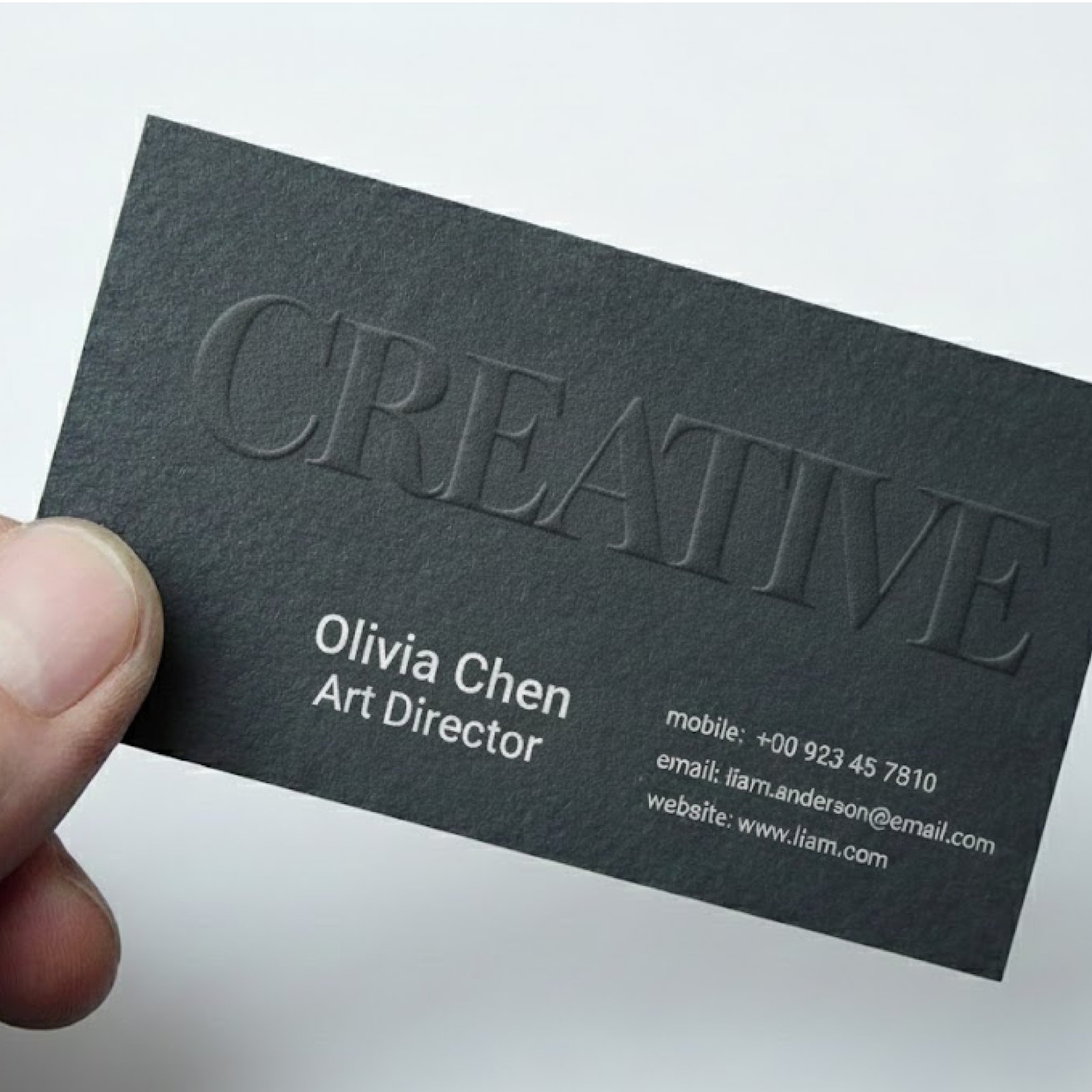
A few year back, a client in commercial real estate showed me his competitor's business card. It was black, with the logo in gold foil, debossed so you could feel it with your thumb. No other colors, no patterns. Just black and gold and texture.
"That card probably cost three times what mine did," he said. "And it's worth every dirham."
He was right on both counts. Premium finishes cost more. But in the UAE's business environment - whether you're in Dubai, Abu Dhabi, or Al Ain - where first impressions are currency - they're often worth investment.
Here's what you need to know about each premium finish, when to use them, and how to combine them for maximum impact.
The Premium Finish Options

Gold & Silver Foil PREMIUM
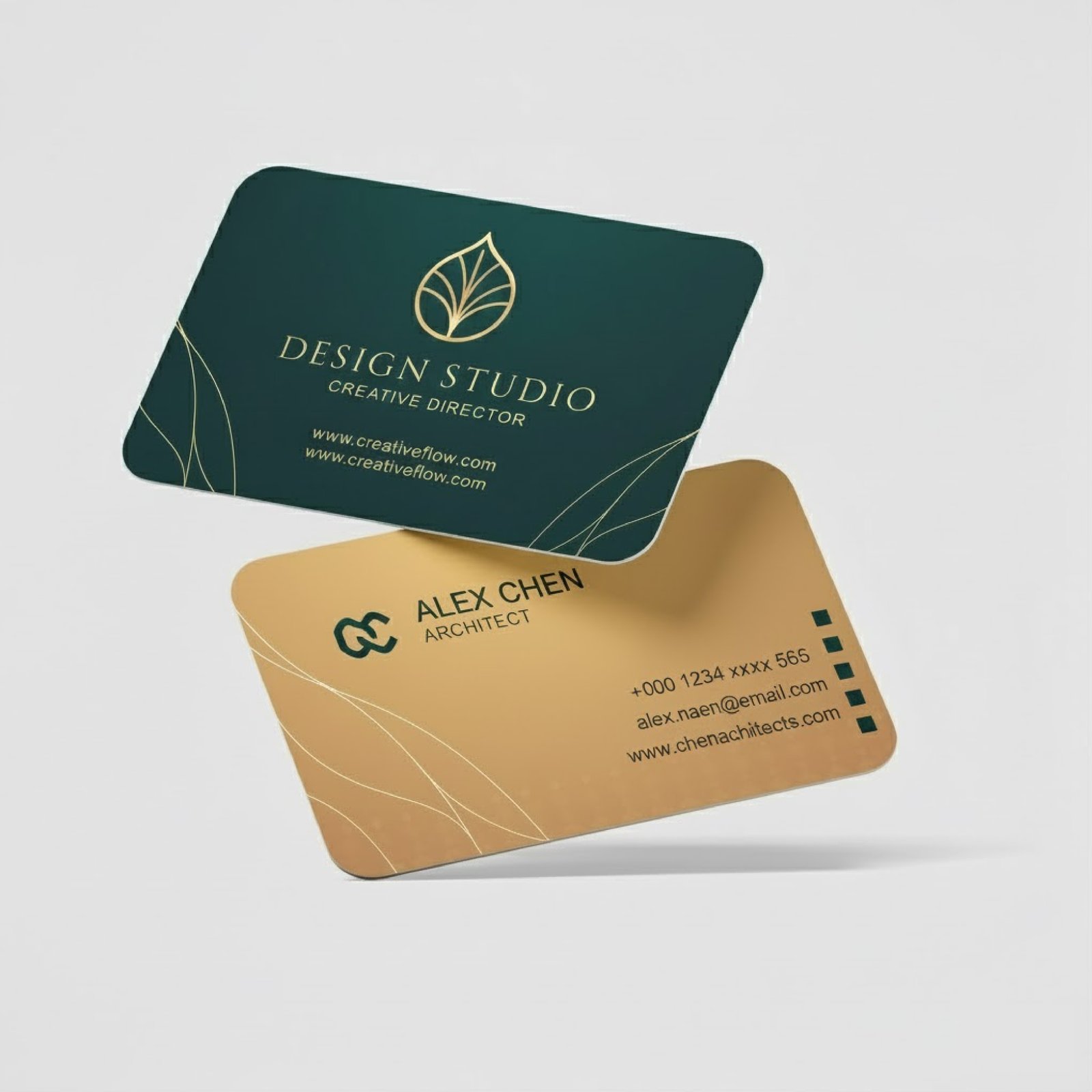
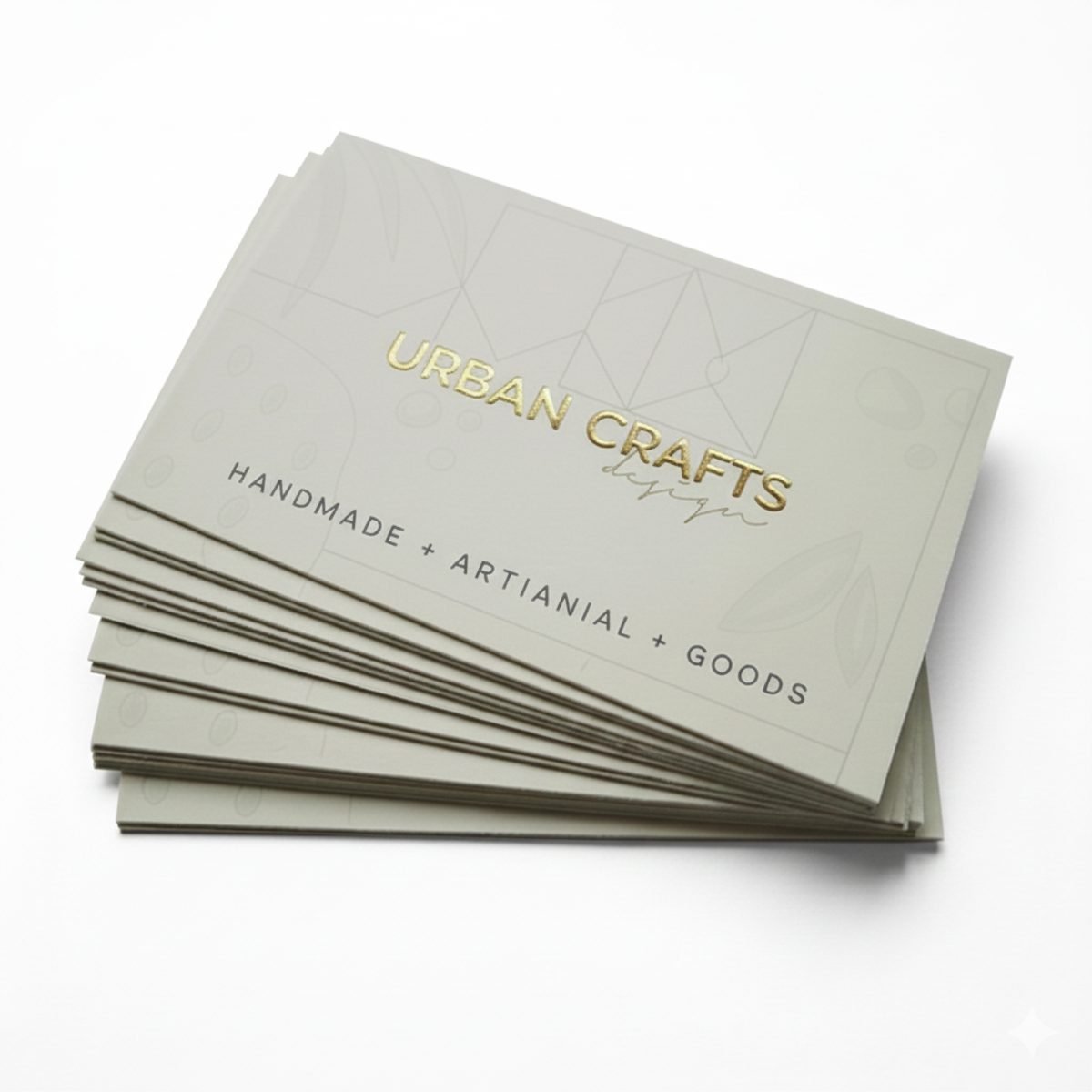
Real metallic foil is stamped onto the card using heat and pressure. It catches light, reflects beautifully, and feels undeniably luxurious. Nothing else replicates shimmer of genuine foil.
Available colors: Gold (most popular in Dubai), silver, rose gold, copper, holographic
Best for:
- Logos and company names
- Accent elements and borders
- Text on dark backgrounds
- Luxury brands, real estate, finance, hospitality
Considerations:
- Can't print fine details - minimum line thickness applies
- Large foil areas increase cost significantly
- Works best on smooth, uncoated paper
Embossing (Raised)
Creates a raised, 3D effect by pressing paper from behind. The design literally rises off card surface. Adds a tactile dimension that people instinctively want to touch.
Types:
- Blind embossing: No ink or foil - just raised texture (elegant, subtle)
- Foil + embossing: Raised areas with foil on top (maximum impact)
- Registered embossing: Embossing aligned with printed elements
Best for:
- Logos (especially simple ones)
- Company names
- Border patterns
- Premium corporate cards
Debossing (Pressed In)
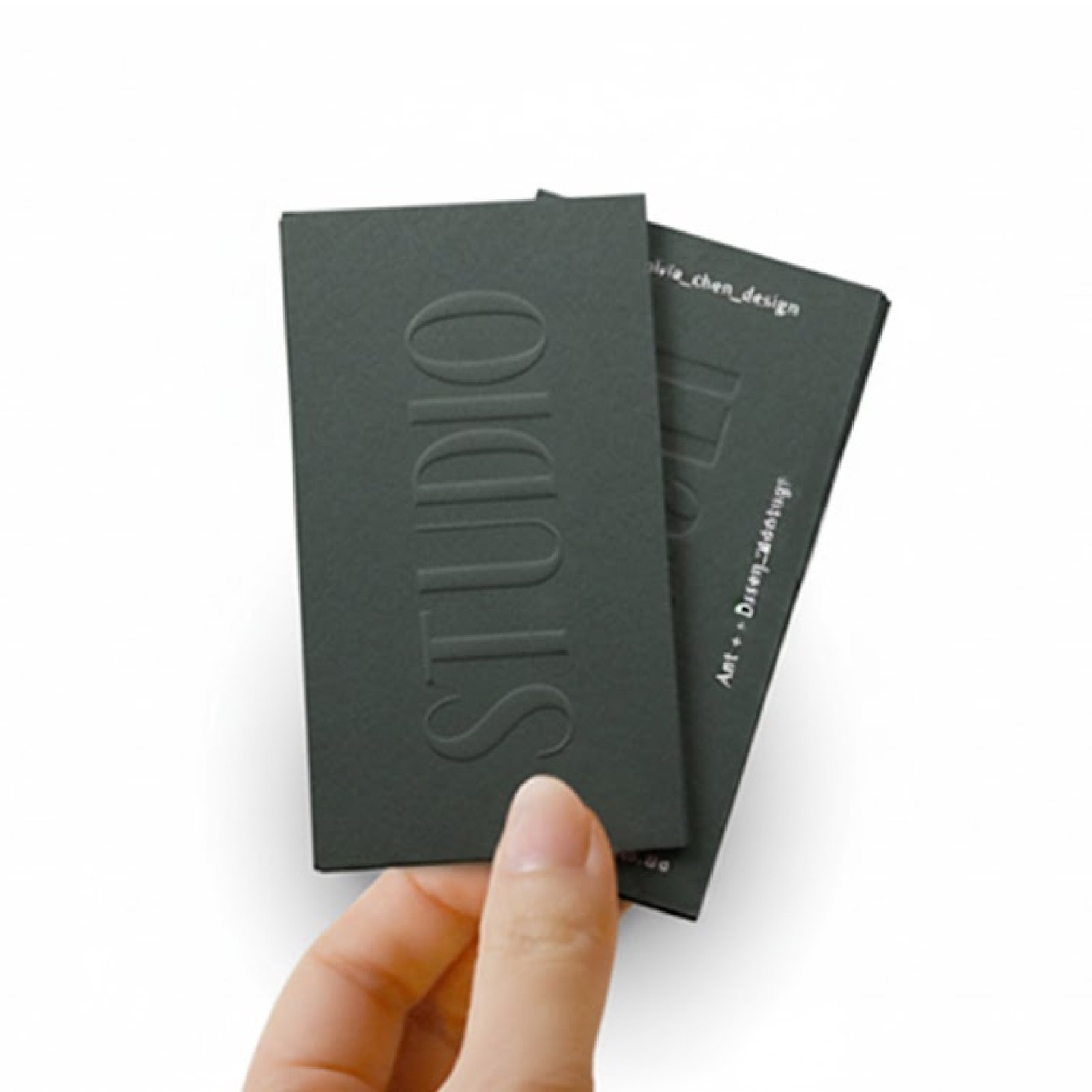
The opposite of embossing - the design is pressed INTO the card, creating an indented effect. Often feels more refined and modern than embossing. Works beautifully on thick cotton papers.
Why debossing over embossing:
- More subtle, sophisticated look
- Works better with certain paper textures
- Creates interesting shadow effects
- Less likely to show wear over time
Spot UV Coating
A glossy, raised varnish applied to specific areas of the card. When combined with a matte background, the contrast is stunning - matte surroundings with shiny highlighted elements.
Best applications:
- Logos (makes them pop)
- Patterns and textures
- Highlighting key text
- Creating visual contrast
Pro tip: Spot UV on a matte laminated card is one of the most cost effective ways to add premium feel. The price difference between basic and premium is smaller than with foil.
500 cards: contact us for pricingSoft Touch (Velvet) Lamination
Not technically a "finish" but transforms how your card feels. Soft touch lamination gives cards a velvety, almost rubbery texture that people can't stop touching. Resists fingerprints and scuffs.
Why it works:
- Instant perceived value increase
- Tactile experience people remember
- Protects print from wear
- Can be combined with other finishes (spot UV on soft touch is gorgeous)
Price Comparison (UAE)
| Finish | 500 Cards | 1000 Cards |
|---|---|---|
| Standard (350 GSM, matte) | contact us for pricing | contact us for pricing |
| Soft touch lamination | contact us for pricing | contact us for pricing |
| Spot UV | contact us for pricing | contact us for pricing |
| Embossing/Debossing | contact us for pricing | contact us for pricing |
| Gold/Silver Foil | contact us for pricing | contact us for pricing |
| Foil + Embossing combo | contact us for pricing | contact us for pricing |
Winning Finish Combinations
The Classic Luxury (Most Popular)
Recipe: Black or navy card + gold foil logo + debossed logo
Effect: Timeless elegance. The gold catches light while the debossing adds tactile interest.
Popular with: Law firms, finance, luxury real estate, hotels
The Modern Premium
Recipe: White card + soft touch lamination + spot UV logo
Effect: Clean, contemporary, satisfying to hold. The contrast between matte soft touch and glossy spot UV is subtle but impactful.
Popular with: Tech companies, design agencies, consultancies
The Subtle Statement
Recipe: Thick cotton paper + blind debossing
Effect: No foil, no gloss - just quality paper and texture. Understated luxury for those who know.
Popular with: Architects, high end consultants, creative directors
Maximum Impact
Recipe: Thick black card + rose gold foil + raised embossing + soft touch
Effect: All the finishes working together. Expensive but unforgettable.
Popular with: Luxury brands, premium services, VIP cards
Design Tips for Premium Finishes
For Foil:
- Keep designs simple - foil doesn't hold fine detail well
- Minimum line thickness: 0.5mm
- Avoid large solid foil areas (expensive and can look tacky)
- Dark backgrounds make foil pop most
For Embossing/Debossing:
- Simple shapes work best
- Avoid fine text (gets lost in the texture)
- Thicker paper = deeper emboss possible
- Consider how it looks AND feels
For Spot UV:
- Create artwork in a separate layer
- Minimum 0.3mm line width
- Full bleed spot UV is possible
- Best contrast on matte backgrounds
Common Mistakes to Avoid
Mistake #1: Too many finishes
Using foil AND spot UV AND embossing all at once often looks busy rather than premium. Pick one or two finishes and let them shine.
Mistake #2: Foil on fine text
Phone numbers and email addresses in foil often become illegible. Keep foil for logos and headlines.
Mistake #3: Wrong paper pairing
Premium finishes on cheap paper waste finish. Invest in the paper too - minimum 350 GSM for embossing, preferably thicker.
Mistake #4: Skipping samples
Always request printed samples before ordering 500+ cards. What looks great on screen might not translate to print.
Production Time
- Spot UV: 4 to 5 working days
- Foil stamping: 5 to 7 working days
- Embossing/Debossing: 5 to 7 working days
- Combination finishes: 7 to 10 working days
Premium finishes require additional production steps. Don't expect rush delivery on complex orders.
Practical Considerations for Premium Business Card Finishes in the UAE Market
The UAE business environment presents unique opportunities and challenges when it comes to premium business cards. Understanding local market dynamics, cultural preferences, and seasonal patterns helps businesses make informed decisions about their print material investments and timing.
Bilingual content is increasingly expected across all business communications in the UAE. Whether you are producing brochures, signage, or promotional materials, offering Arabic alongside English demonstrates cultural awareness and expands your reach to a broader audience. Our design team handles bilingual layouts with proper right to left Arabic formatting and ensures both languages receive equal visual prominence.
Material durability is a critical factor in the UAE climate. Indoor materials face air conditioned environments that can cause paper to dry out and curl, while outdoor materials must withstand intense UV exposure and occasional sandstorms. We select materials specifically suited to the intended use environment, ensuring your investment maintains its professional appearance throughout its expected lifespan.
Getting the Best Value From Your Print Investment
Maximizing return on your print materials budget starts with strategic planning about quantities, timing, and material selection. Ordering in larger batches reduces your per unit cost significantly because the setup costs for printing are spread across more units. A batch of 1,000 brochures might cost 40 percent less per piece than an order of 250 of the same brochure.
Timing your orders to avoid rush production surcharges is another effective way to manage costs. Planning ahead and ordering standard turnaround instead of express production typically saves 15 to 25 percent on the total order cost. We recommend building a quarterly print calendar that identifies all upcoming material needs so orders can be batched and scheduled efficiently.
Working with a single printing partner for all your material needs, rather than sourcing different items from different vendors, creates consistency in quality and brand presentation while simplifying your procurement process. A dedicated account with your printer means your brand guidelines, preferred materials, and design templates are always on file for faster reorders.
Letterpress, Foil and Die Cutting
Letterpress business cards in Dubai press the design into a thick cotton stock so the mark can be felt, and luxury business cards in the UAE are increasingly judged by that touch rather than by print quality alone.
Foil business cards in Dubai stamp a metallic film under heat, and a gold foil business card in the UAE catches light in a way printed gold ink never does. The trade off is a physical die, so artwork must be final before tooling.
Die cut business cards take the shape past the rectangle, and searches for die cut business cards near me are usually about turnaround rather than design, since the die is the part that sets the lead time.
Frequently Asked Questions
What is the standard turnaround time for print orders in the UAE?
Standard production takes three to five business days for most printed materials including business cards, brochures, flyers, and stickers. Large format items like banners and signage typically take five to seven days. Rush production with 24 to 48 hour turnaround is available for urgent requirements at an additional fee.
Do you offer design support for print orders?
Yes, complimentary design consultation and basic artwork adjustments are included with all orders. For clients who need designs created from scratch, our professional design service is available at competitive rates. Most clients find that our included design support is sufficient for standard business printing needs.
Can you match exact brand colors across different print materials?
Absolutely. We use Pantone color matching to ensure consistency across all your printed materials, from business cards to large format banners. Provide us with your Pantone codes or a physical sample, and we guarantee color accuracy across all substrates and production runs.
What areas do you deliver to in the UAE?
We deliver across all seven emirates including Dubai, Abu Dhabi, Sharjah, Ajman, Al Ain, Ras Al Khaimah, Fujairah, and Umm Al Quwain. Free delivery is available on qualifying orders within Dubai, with next business day delivery to Abu Dhabi and the Northern Emirates.
Is there a minimum order quantity?
Minimum order quantities vary by product type. Business cards start at 250 pieces, brochures and flyers at 100 pieces, stickers at 50 sheets, and banners at 1 piece. We accommodate both small batch orders for startups and large volume production runs for established businesses with equal attention to quality.
What our clients say
"They delivered exactly what we needed, on time, and the quality was better than expected. We've used them for multiple projects since."
That's kind of feedback we aim for on every job. Whether it's a small order or a large campaign, we put same attention into getting it right.
Want to see samples? Just ask - we're happy to show you what we can do.
Ready to Create Premium Business Cards?
We offer all finishes discussed above with sample options available. Delivery across Dubai, Abu Dhabi, Al Ain, and the entire UAE.
Request Samples+971 56 978 6395
Atiya Naaz
Marketing Head, Branding Blitz
Atiya brings five years of hands on experience in the UAE printing and branding industry. Based in Abu Dhabi, she leads marketing team at Branding Blitz, helping businesses across Dubai, Abu Dhabi, Sharjah, and all emirates find right print solutions for their branding needs. Her expertise spans corporate identity materials, exhibition printing, packaging design, and digital marketing strategy for the regional market.
Related resources: See our complete business card printing in the UAE and dedicated corporate stationery printing pages for specifications, pricing, and design options.