"The panel decides whether the sign survives the season."
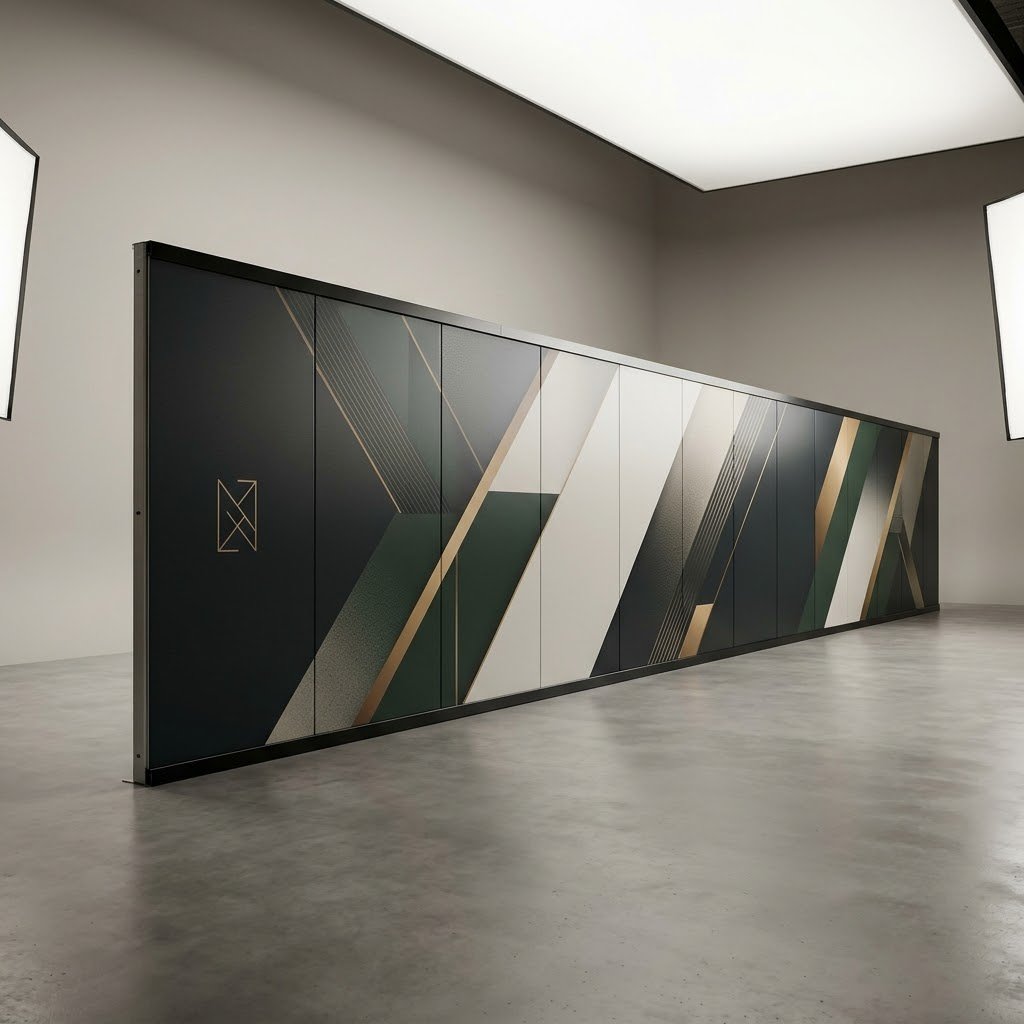
A sign board is chosen by where it lives rather than how it looks on a proof. We supply stainless steel, aluminium, dibond, foamex, correx and acrylic panels, engraved or printed, with the fixing method specified alongside.
Corporate office reception desks, law firm partner offices, medical practice consultation rooms, government department offices, hotel front desk and concierge stations, bank branch manager desks, real estate agency offices, educational institution administrators, hospital ward stations, consulting firm executive suites, accounting practice offices, and any professional business requiring employee identification across Dubai, Abu Dhabi, Sharjah, and all UAE.
Your quote request has been submitted successfully.
We'll get back to you within 24 hours.
A sign board is chosen by where it lives rather than by how it looks on a proof, because the same artwork on the wrong panel fails within a season.
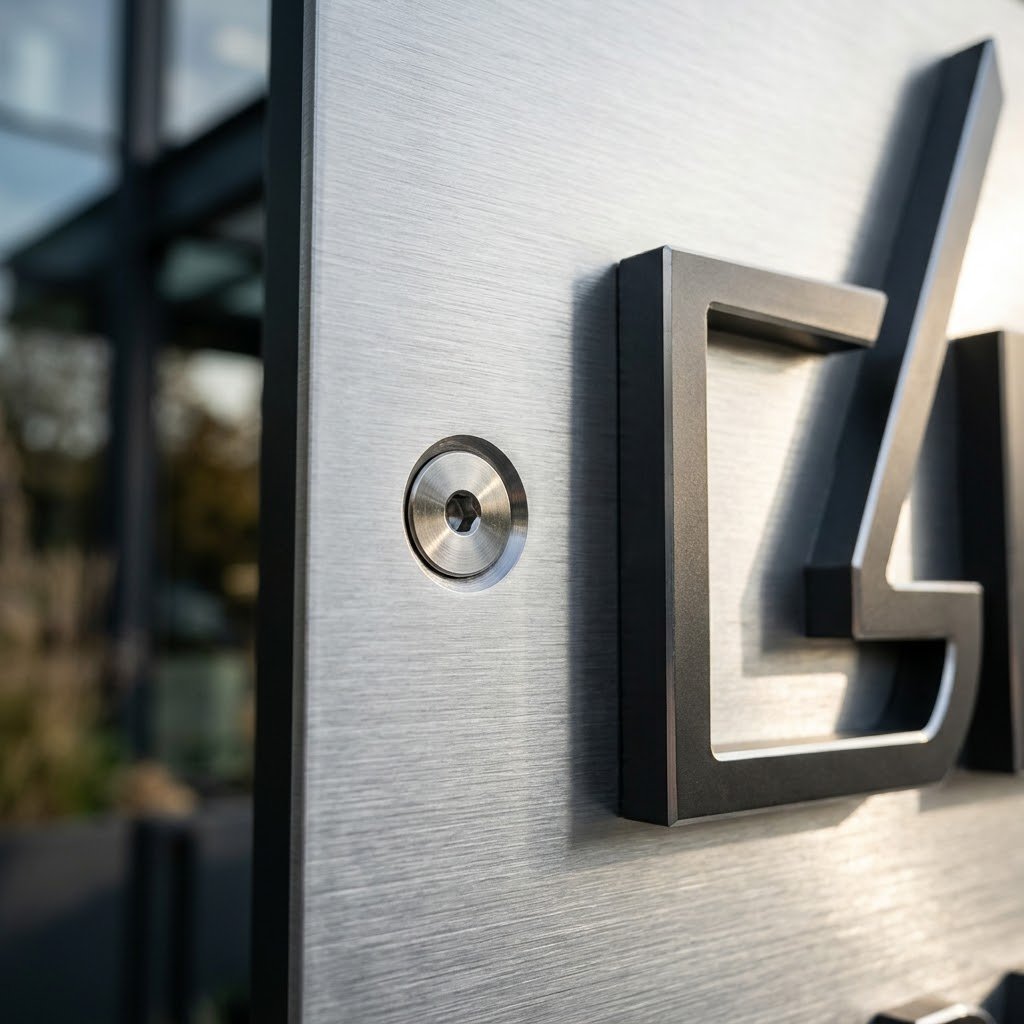
Stainless steel signage holds its finish outdoors without plating, and stainless steel sign boards in brushed grade hide handling marks that a mirror finish shows immediately.
Metal signage dubai projects specify is usually aluminium rather than steel, since it weighs far less on a facade and does not rust at all.
Aluminium signage in composite panel form gives a large flat face that stays flat, which is what a long fascia needs.
Galvanized metal signage suits industrial and site use, where the coating matters more than the appearance.
Engraved metal signs cut the text into the surface rather than printing it, so the mark survives cleaning, weather and years of handling.
Dibond signs bond two thin aluminium skins to a plastic core, giving a rigid lightweight panel that is the default for most flat exterior signs.
Foamex signs use rigid pvc foam, which cuts cleanly and costs far less, and they belong indoors or on short outdoor campaigns.
Correx signs are fluted plastic, light and cheap enough to be treated as temporary, which is why site and event work uses them.
Cardboard signs are the shortest lived of all and suit indoor promotions where the sign is replaced with the campaign.
An acrylic signage board gives a glossy face with real depth, and acrylic base signage adds a solid backing so the panel can stand rather than hang.
Wall mounted signage and wall mounting signage cover the fixing rather than the panel, and standoffs, plates and concealed fixings each change how the finished sign reads.
An acrylic sign board is the format most offices and clinics settle on indoors, because the material takes a clean edge, holds its gloss without coating and can be lit from the edge where a metal panel cannot.
Thickness drives the look more than the print does. A three millimetre sheet reads as a label, while ten millimetre and above reads as an object, and that one choice separates a cheap acrylic sign board from something that looks commissioned.
Clear, frosted and solid colour sheets behave differently behind the same artwork. Clear needs a backing print or the wall shows through, frosted softens whatever sits behind it, and solid colour gives the most predictable acrylic sign board at the lowest cost.
The most common specification error is buying an interior panel for an exterior position. Foamex indoors lasts for years and the same sheet on a west facing wall here distorts within a summer.
Panel thickness follows the span rather than the size of the artwork. A long fascia in a thin sheet ripples between fixings, and that ripple is visible from the road even when the print is perfect.
Edge finishing decides how the panel ages. A raw cut edge on an exterior sign lets moisture into the core, and on composite panels that is where failure starts.
Printing carries colour and photography and costs least, but the ink sits on the surface, so its life depends entirely on the laminate over it.
Engraving cuts into the material itself and survives cleaning, weather and handling indefinitely. It is limited to text and simple marks, and it cannot carry a photograph.
Cut vinyl applied to a panel gives solid colour with no background, which suits a simple mark and is the cheapest route to a clean result.
We hold the common panel stocks in Dubai, so a standard board does not wait on import, and we quote the fixing method alongside the panel rather than leaving it to the installer.
A company sign board on a tower fascia and an apartment sign board beside a front door are the same product in name only. The first is read from a road at forty metres and needs letter heights that survive that distance. The second is read from an arm's length, where contrast matters far more than scale.
Retail units inside a mall are usually bound by the centre's own specification, so panel, depth and illumination are decided before the artwork begins. A standalone shopfront sign board has more freedom and more responsibility, because nothing is shading it from the sun.
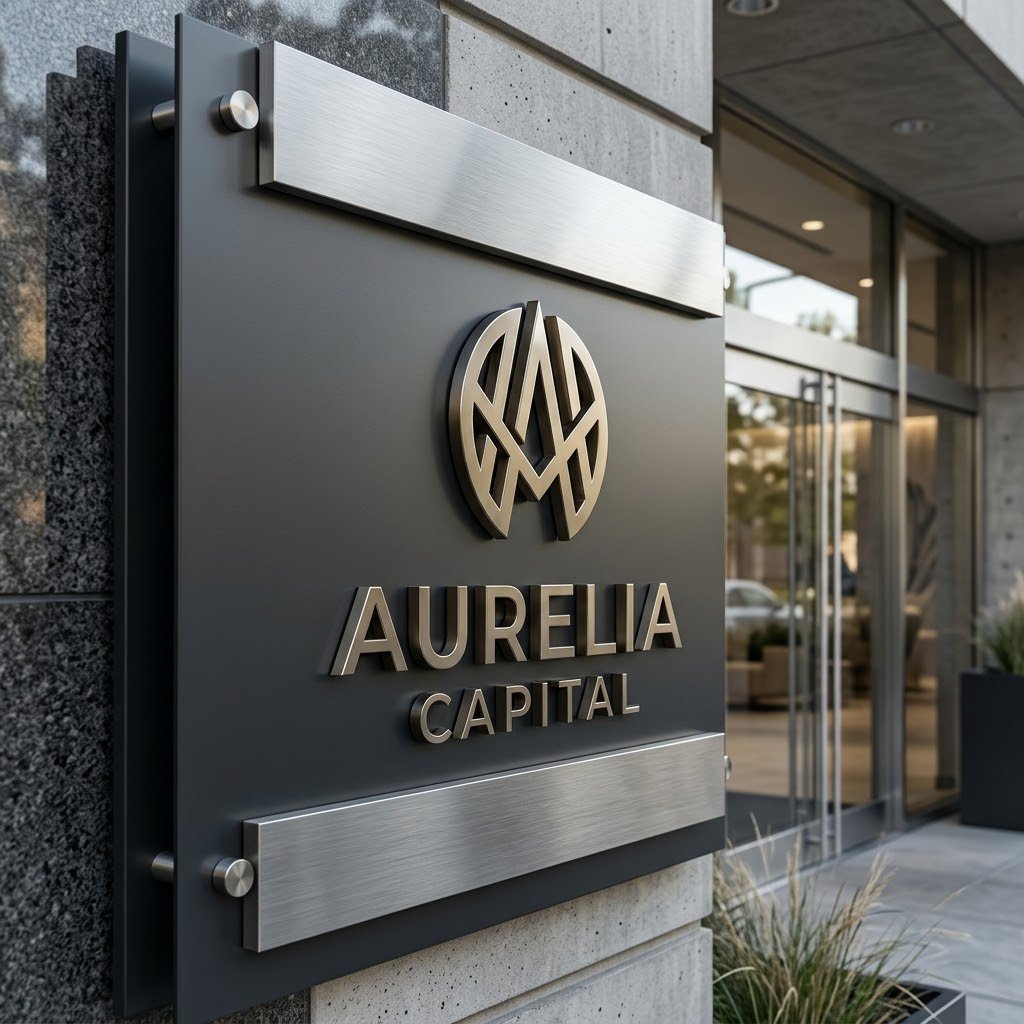
Office sign boards split into two jobs. The external one carries the trade name and sits on glass or a facade. The internal ones label meeting rooms, departments and floors, and in those smaller formats a consistent typeface does more work than any material choice.
Industrial and site work treats the panel as a consumable. A galvanised or correx board on a boundary hoarding is expected to come down when the project moves, so money spent on finish there is money wasted.
Clinics, schools and government facing premises carry a third constraint, which is bilingual layout. Arabic and English on one panel are not two lines of the same text, because Arabic needs more vertical room at the same optical size and reads right to left, so the lockup is designed rather than translated.
The working rule is twenty five millimetres of capital height for every ten metres of reading distance. A fascia read from thirty metres needs letters around seventy five millimetres tall, and anything smaller is decoration rather than signage.
Sign board design starts from that number and works backwards, because it fixes the panel size before any layout exists. Starting with the artwork and sizing the board to fit it almost always produces something unreadable from the position it will occupy.
Long trade names are where this bites. A name needing seventy five millimetre letters across twenty characters will not fit a two metre fascia, and the honest answer is to shorten the lockup rather than shrink the type.
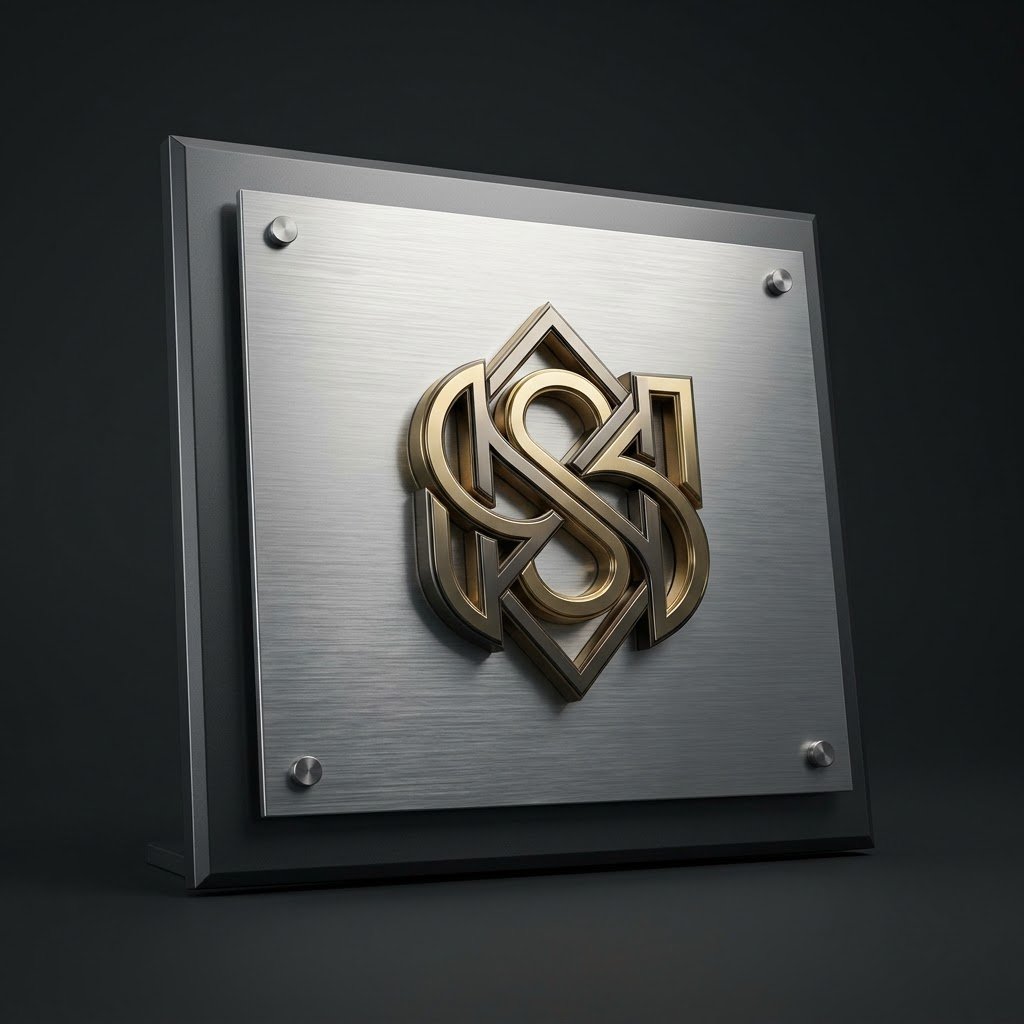
A 3d sign board builds the letters as separate objects instead of printing them on a flat face. Cut acrylic, built up aluminium and fabricated steel all do this, and the depth reads as permanent even before anything is lit.
3d sign board design carries one constraint flat work does not, which is that every letter becomes a part to fabricate, fix and align. Thin strokes and tight counters that look fine on screen turn fragile at the cutter, so the typeface is chosen with fabrication in mind.
A 3d sign board can be left unlit, front lit or halo lit, and the same set of letters supports all three, so the illumination decision can wait until the facade has been surveyed.
A led sign board is the common illuminated format now. Modules sit behind or inside the letters, the driver lives in a housing, and the decision that matters is front lit, back lit or edge lit rather than the brand of the diode.
Front lit pushes light out through a translucent face and gives the brightest, most legible night result. Back lit throws light onto the wall behind for a halo that reads as more considered but less legible. Edge lit suits acrylic panels indoors.
A neon sign board today is almost always flexible LED strip rather than glass tube. It bends to a script, draws a fraction of the power and survives being knocked, which is why glass neon now belongs to restoration rather than new work.
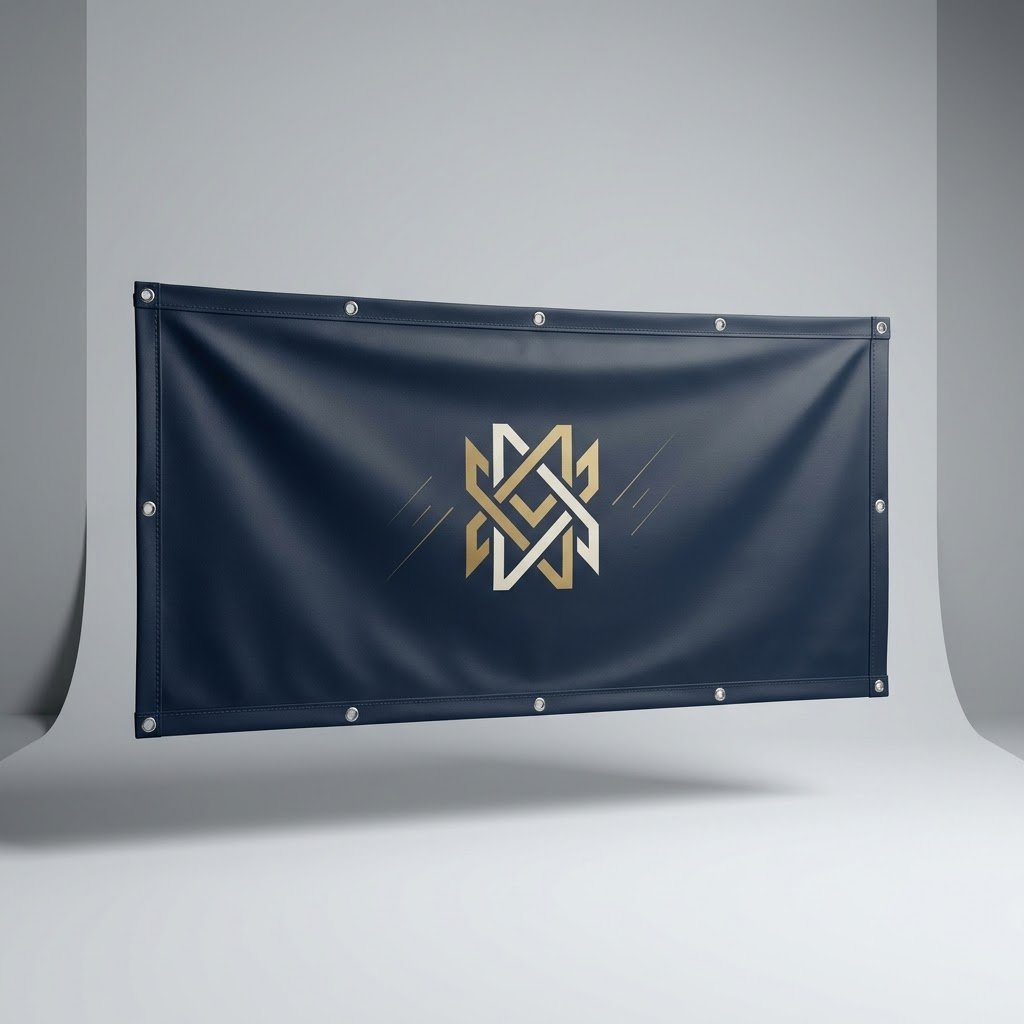
A flex sign board stretches a printed banner face over a frame and lights it from behind. It covers large areas cheaply, which is why it dominates cinema fronts and supermarket fascias, and its weakness is that the face moves in wind and shows every repair.
An electric sign board of any kind brings a second trade into the job. Cable routes, isolators and the position of the supply have to be settled before fabrication, because retrofitting power into a finished panel means cutting it open again.
Sign board cost in dubai is quoted per square metre for flat work and per letter for built up work, and the two bases are not comparable. A flat printed panel and the same trade name in individual letters can differ by a factor of six.
Cost on a 3d sign board scales with letter count rather than overall width, which is why a short trade name in tall letters often comes in under a long name in small ones.
Three lines usually carry more weight than the panel itself: access equipment for anything above ground floor, the electrical connection on an illuminated unit, and any building or authority approval. A quote that leaves them out is not cheaper, only incomplete.
One sign board company quoting per square metre and another quoting per letter are answering different questions, so the two figures cannot be compared until you know which basis each used.
Volume changes the shape of the price rather than only the total. A single unit carries the full setup, while a rollout across twenty branches spreads tooling and produces one colour reference for every site, which is worth more in practice than the discount.
The cheapest route to a clean result on a small budget is cut vinyl on a rigid panel. It gives solid colour with no background, costs a fraction of built up letters and looks deliberate, which is more than can be said for a poorly printed full colour board.
Fabrication and installation are separate skills and it is worth knowing which one you are buying. A sign board company that makes the panel beautifully and fixes it badly leaves a worse result than a plain board fixed properly.
Ask any sign board company how many of the trades on your job sit inside their own workshop. Panel cutting, letter fabrication, electrical work and installation are four separate skills, and the number that get subcontracted is the number of handovers where responsibility goes missing.
Workshops describing themselves as sign board manufacturers usually quote the panel and leave the wall to someone else. A full service sign board company dubai buyers tend to shortlist handles both, and that second kind carries the risk when a fixing fails.
Most production in the country sits in the northern industrial belt rather than the city centres. Sign board makers in dubai and workshops listed simply as sign board ajman are frequently working out of the same corridor.
That is why a quote from a Dubai address and one from Ajman often arrive within a few dirhams of each other. Our own fabrication sits in Ajman, where the sheet stock and the cutting bed are, and we deliver and install across all seven emirates from there.
Anyone comparing sign board suppliers on price alone should settle what is actually included first:
Dubai Municipality signage compliance is the step most first time buyers miss. External signage on a commercial building needs approval, the drawing submitted has to match what is actually fabricated, and a board installed without it can be ordered down at the owner's cost.
Mall and free zone authorities run parallel rules, usually stricter than the municipality on depth, illumination and position. Checking those before design rather than after fabrication is the cheapest decision in the whole process.
Custom sign board installation is where most failures begin. The wrong anchor in blockwork, a fixing driven straight into a composite core with no sleeve, or no allowance for thermal movement across a long panel will each pull a well made board apart within two summers.
Most sign board company warranties cover the panel and not the fixing, which is the reverse of where failures actually happen, so the warranty wording is worth reading before the deposit.
Service life is set by the laminate on printed work and by the grade on metal work. A printed face under a good UV laminate holds colour for roughly five years here, while the same print left unlaminated fades visibly inside one.
A sign board near me search usually means a replacement face or a repair rather than a new installation. Those sign board jobs need the existing frame measured before anything is quoted, because the frame decides what the new face can be.
A sign board logo has to survive reproduction at a size its original designer never considered. Fine strokes, gradients and drop shadows that work on a business card either disappear or look dirty at two metres wide.
Vector artwork is the only usable starting point for cut or engraved work, because the cutter follows a path rather than a pixel. We redraw raster logos when that is all a client holds, and that redraw is quoted once and reused across every format afterwards.
Colour behaves differently on each substrate. One brand colour printed on foam, on acrylic and on a flex face reads as three slightly different shades, since each surface has a different base whiteness, so a rollout across formats needs a profiled reference rather than a pantone number alone.