What's a Pamphlet, Plainly
What's a pamphlet is one of those questions that sounds simple until three suppliers give three different answers.
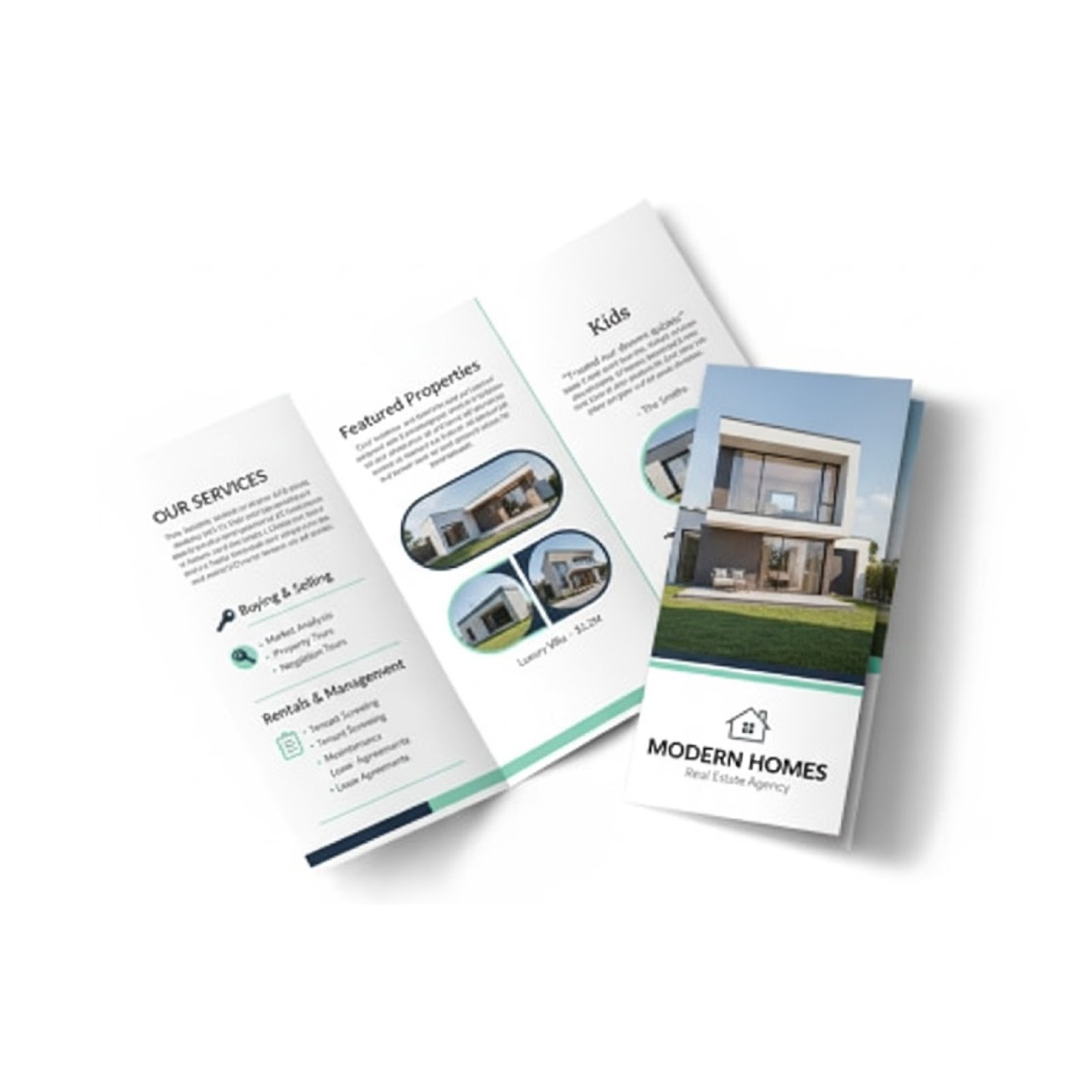
A pamphlet is a short printed document, usually a single sheet folded once or twice, produced to explain something rather than to sell hard.
The word carries a slightly informational tone. Museums, clinics and government departments issue pamphlets, while retailers issue flyers, and the printing is identical.
Types of pamphlets divide by fold rather than by content. A single fold gives four panels, a trifold gives six, and a Z fold gives six that open flat in sequence.
Types of pamphlet beyond those are variations on the same idea: gate folds that open from both sides, roll folds that tuck inward, and quad folds that carry eight panels.
Anyone comparing leaflets and pamphlets across two quotes is comparing the same production route under two names.
Flyer, Leaflet, Pamphlet: the Same Sheet
Flyer or pamphlet is the most common version of this question, and for quoting purposes the answer is that they are the same product.
Flyer and pamphlet differ in tone rather than in specification. A flyer pushes an offer, a pamphlet explains a subject, and both print on the same press.
Pamphlet vs leaflet is a regional distinction more than a technical one, with leaflet the more common word in British usage and pamphlet the more common one in American.
Leaflet or pamphlet on a quote should therefore be read as a description of intent, not of construction.
Flyers or leaflets asked as a choice usually means someone deciding between a flat sheet and a folded one, which is the only difference that changes the price.
Flyer vs leaflet resolves the same way: a flyer is normally unfolded, a leaflet normally folded once.
Flyer or leaflet for a handout campaign comes down to how much needs saying. One side of A5 or four panels of a folded DL.
The difference between pamphlet and flyer, if you need one line, is that a pamphlet folds and a flyer usually does not.
Pamphlet vs flyer in a print quote changes nothing at all, since the folding is a finishing operation priced separately either way.
Flyer vs pamphlet asked the other way round gives the same answer, and flyers vs pamphlet as a plural comparison does too.
Leaflet and pamphlet used together in one brief usually means the client wants both a flat handout and a folded explainer.
Flyer or flier for paper handout is purely a spelling question. Flyer is standard in the UAE and the UK, flier appears in some American usage, and neither changes what gets printed.
Where Posters Sit in All of This
The difference between leaflet and poster is size and distance. A leaflet is handed over and read at arm length, while an A2 poster is fixed to a wall and read from across a room.
That distance changes everything about the design. A poster carries one message in large type, and a leaflet carries several in body copy.
Poster and pamphlet as a pair is a common campaign brief: the poster draws attention in the space, the pamphlet goes home with the reader.
Print specification differs too. A poster runs on a heavier stock or a board because it hangs unsupported, and a leaflet runs light because it is carried.
What Flyers Are Actually For
What is the purpose of flyers, honestly stated, is to put a single message into a hand at a moment when the reader is receptive.
What is the purpose of a flyer in a retail campaign is to move someone across a threshold within a short window, which is why they carry dates and offers rather than background.
That purpose sets the print budget. A flyer is a consumable, so cost per piece matters more than finish, and a 130gsm gloss handles it.
Where the piece has to survive longer, a heavier stock or a laminate is worth the difference, and the same is true of a folded brochure kept for reference.
How to Make a Pamphlet That Works
How to make a pamphlet starts with the fold, not the artwork, because the fold decides how many panels exist and what order they are read in.
Lay the flat sheet out first, mark the panels, then decide what goes on each one. Designing the content before the fold is how panels end up in the wrong sequence.
How to fold a pamphlet on paper for a mock up takes thirty seconds and catches most sequencing errors before anything is designed.
Fold a blank A4 the way the finished piece will fold, number the panels in the order they appear as it opens, and lay the content onto that map.
The front panel has to work alone, because in a rack it is the only face anyone sees.
On a trifold, the tucked inner panel is cut 2 to 3mm narrower so the piece closes flat rather than bulging at the spine.
How to make a good pamphlet beyond that is a matter of restraint. One idea per panel, a clear next step on the back, and margins wide enough that the fold never cuts through text.
Anything above 150gsm needs scoring before folding, or the coating cracks along the crease and the piece looks damaged on arrival.