
Napkins, Printed and Woven
Printed paper napkins carry a brand at the lowest cost per impression in hospitality, because every cover uses at least one. A tissue napkin in two or three ply is the everyday format, and disposable napkins printed in one colour are what most cafes settle on.
Size follows service. Cocktail napkins are the small square used at bars and receptions, and personalized cocktail napkins for a wedding or a launch are ordered by the thousand for a single evening. A dining napkin is larger and heavier, since it has to sit across a lap through a full meal.
At the linen end, cloth napkins and fabric napkins are laundered rather than discarded, so the branding is woven or embroidered instead of printed. That costs more per piece and lasts hundreds of services, which is why fine dining venues still choose it.
Printed napkins are handled by every guest, which makes ply and absorbency as much a branding decision as the artwork is.
Menus That Survive Service
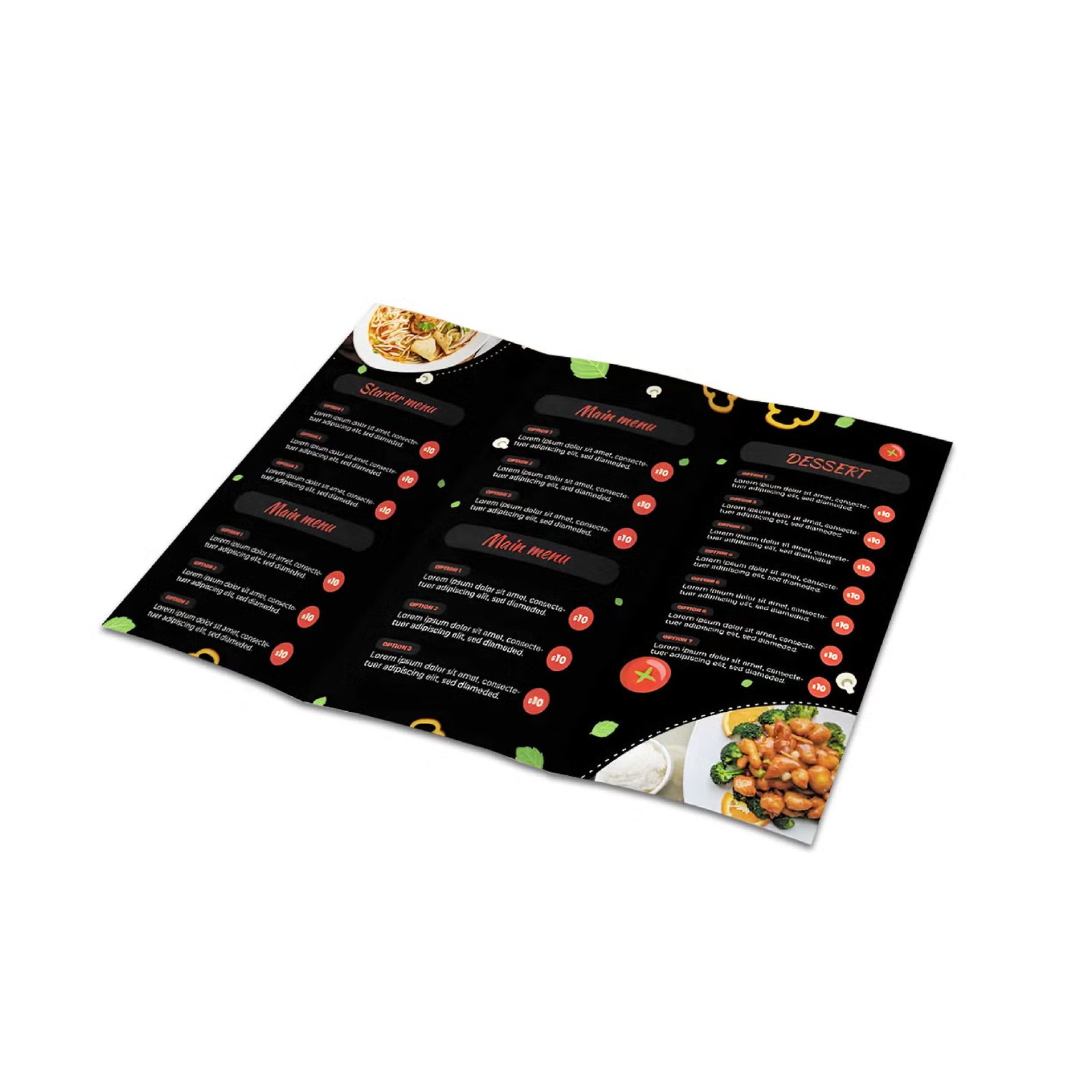
Menu printing is decided by how often the menu changes. A seasonal menu is laminated on 350gsm so it survives handling and wiping, while a weekly menu is printed on an uncoated sheet and treated as consumable.
Take out menu printing is a different product again, printed light and folded for delivery bags or door drops. Menu design and printing handled together avoids the most common problem we see, which is artwork built at the wrong panel size for the fold. Clients searching menu designer near me usually want both parts from one supplier rather than coordinating two.
Format should follow how often prices change, and laminated menus suit a venue that reprints seasonally rather than monthly.
Table Covers and Door Hangers
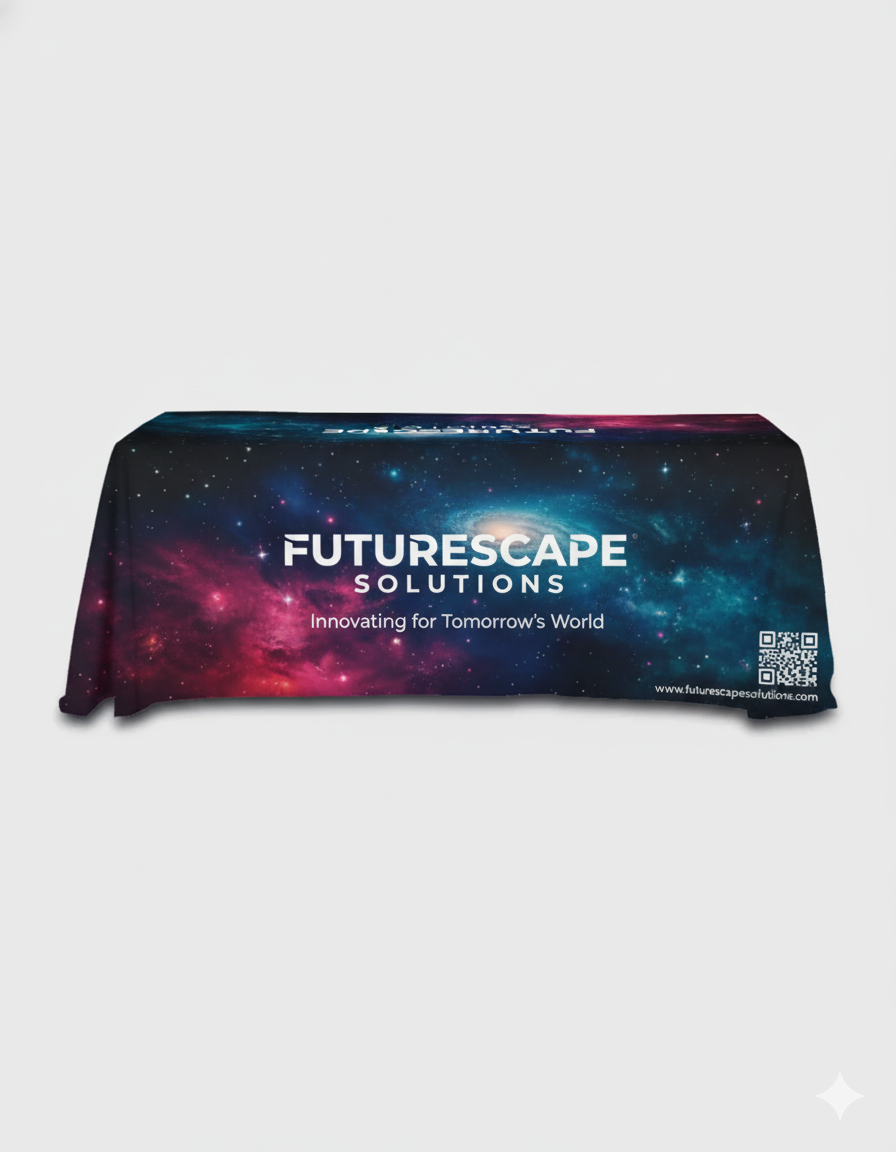
Tablecloth orders in Dubai split between loose drapes and fitted stretch covers. A fitted cover is sewn to the exact table dimensions and sits tight for an exhibition or a product launch, while a loose drape suits banquet rounds where the same cloth covers several table sizes.
Table cloth design work is usually limited to the front panel, since that is the only face guests see from seated height. A dining table cloth for a restaurant is specified in a washable polyester, and a side table cloth for a buffet or a registration desk is normally ordered in the same fabric so the room reads as one set.
Door hangers printing in Dubai covers the hotel side of hospitality. A door hanger in the UAE is die cut at 100 by 250mm with a hook aperture sized for a standard handle, and it is printed both sides because the guest turns it over.
Table settings are completed by placemats, while door hangers move the same print job to rooms and residential distribution.